What happens after your doctor refers you for a PET/CT scan
Once your GP or specialist has given you a referral for a PET/CT you can contact our bookings team to organise your appointment. Then our specialised PET reception will contact you directly to:
- Ask some questions to understand your medical history
- Explain how to prepare for your scan (see more below)
- Talk through any medication adjustments, especially if you are on diabetes medication
- Answer any questions you have
so that they can tailor the scan to your health needs.
How to prepare for your PET/CT scan
Preparation plays a key role in getting clear and accurate images.
You will be asked to:
- Fast for 6 hours before your appointment
- This means no food or drinks as they can affect the scan accuracy
- You may drink plain water to avoid dehydration
- If you’re on diabetes medication, follow the instructions provided on how to adjust your medication safely.
On the bright side, we’ll have tea, coffee and biscuits ready for you when your scan is finished.
What to wear and when to arrive for your PET/CT scan
Comfort matters. We recommend wearing loose, soft clothing, like pants with an elastic waist and a bra without an underwire because your appointment will take about 2 hours. If your clothing contains any metal, like zips or press studs, you’ll be asked to change into a gown which we’ll provide.
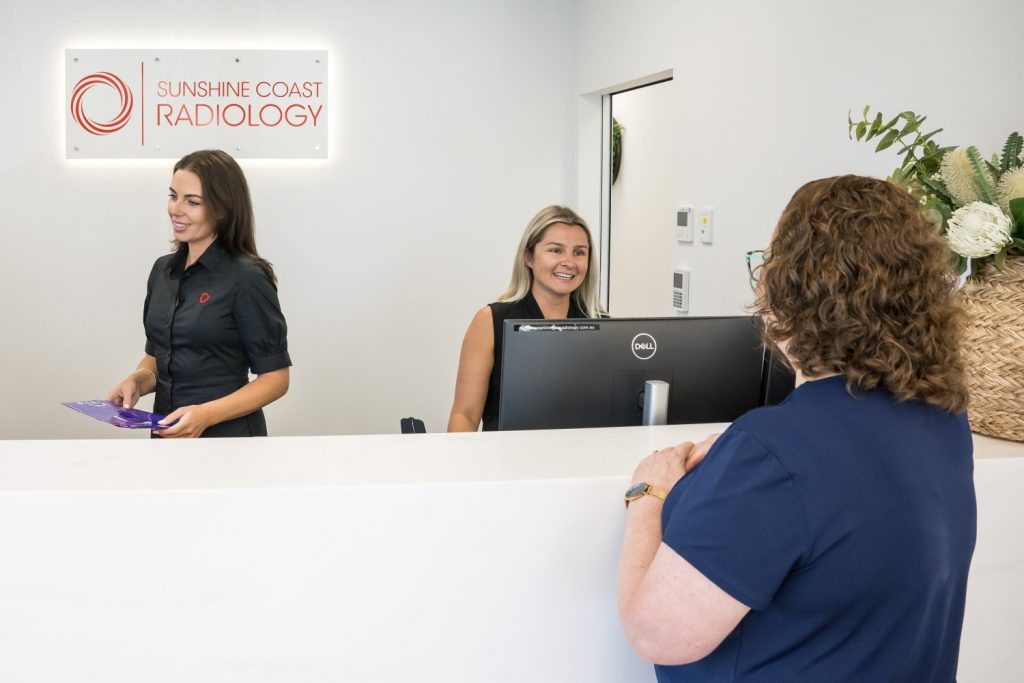
We request you arrive 30 minutes before your appointment time. This allows time to complete the required paperwork.
Our friendly admin team is always happy to help, so you won’t have to navigate this alone.
Who will you meet on the day of your PET/CT scan
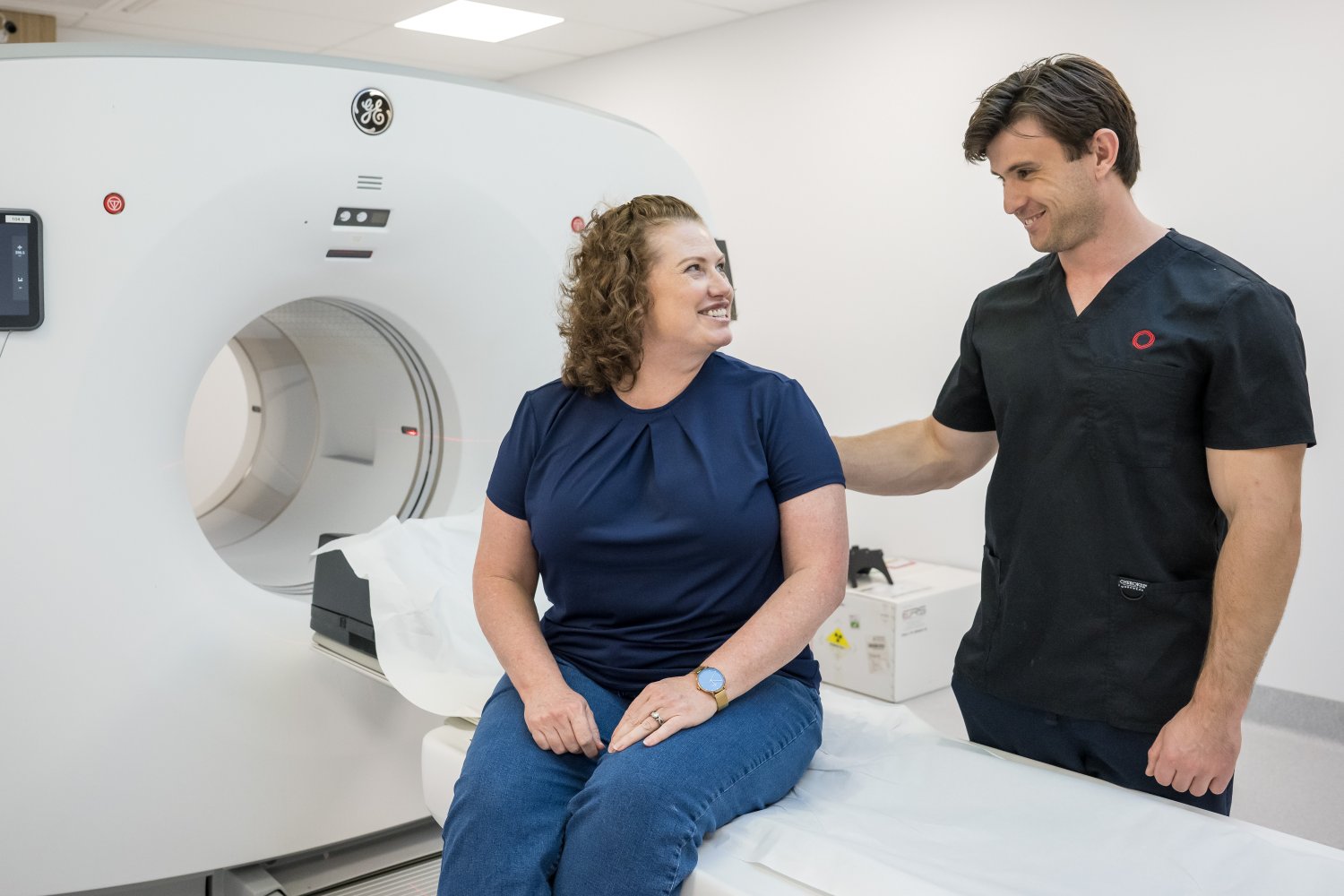
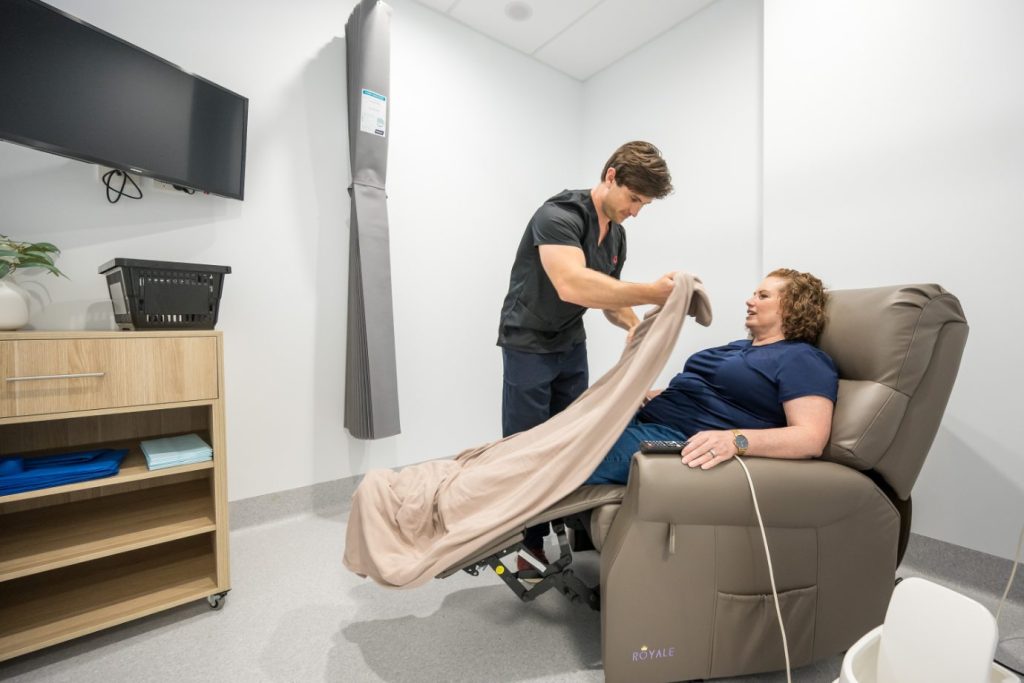
After you’ve checked in, you’ll meet your highly trained Nuclear Medicine Technologist (NMT), and they will guide you to a private space called an uptake room. This is where you will spend most of your appointment time.
This area has:
- A comfortable recliner chair
- A calm, quiet environment
- A television you can watch to help pass the time
Once you’re settled in, your NMT will explain the next steps in more detail.
What happens before your procedure starts
The procedure starts with a few simple steps:
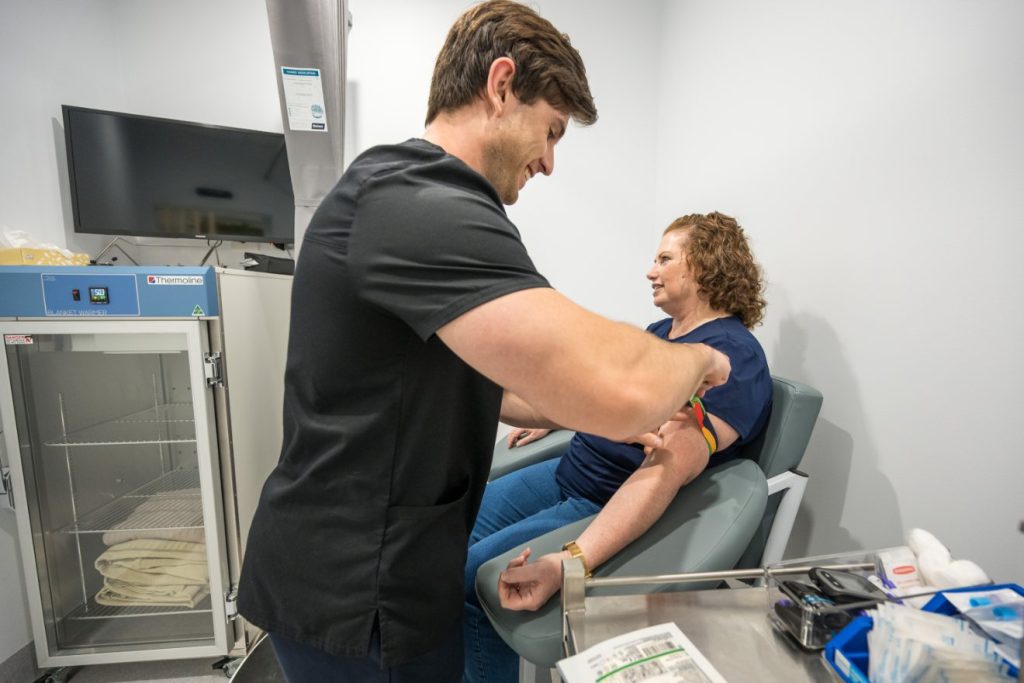
- A small finger prick test to check your blood glucose level to ensure the tracer works as intended
- A cannula, like a small drip, is placed in your arm so that the NMT can administer the tracer
How the tracer works in a PET/CT scan
The tracer is a small amount of radioactive material that will concentrate in areas of increased cellular activity in the body. The PET/CT scan then detects the distribution of the tracer and highlights the structure and function of your tissues.
Your NMT will step into the adjoining room to administer the injection. The injection is done using a remote system through a shielded wall. This is simply a safety measure to reduce staff exposure to radiation over time. Nuclear medicine staff are exposed to higher levels than the public because of the nature of their work.
When the tracer is injected, you may notice a coolness spreading up your arm. This is because the temperature of the tracer is cooler than your blood and this sensation will subside very quickly.
What happens during the uptake period
After the tracer is injected, it takes about 50 minutes for it to be absorbed and distributed through your body.
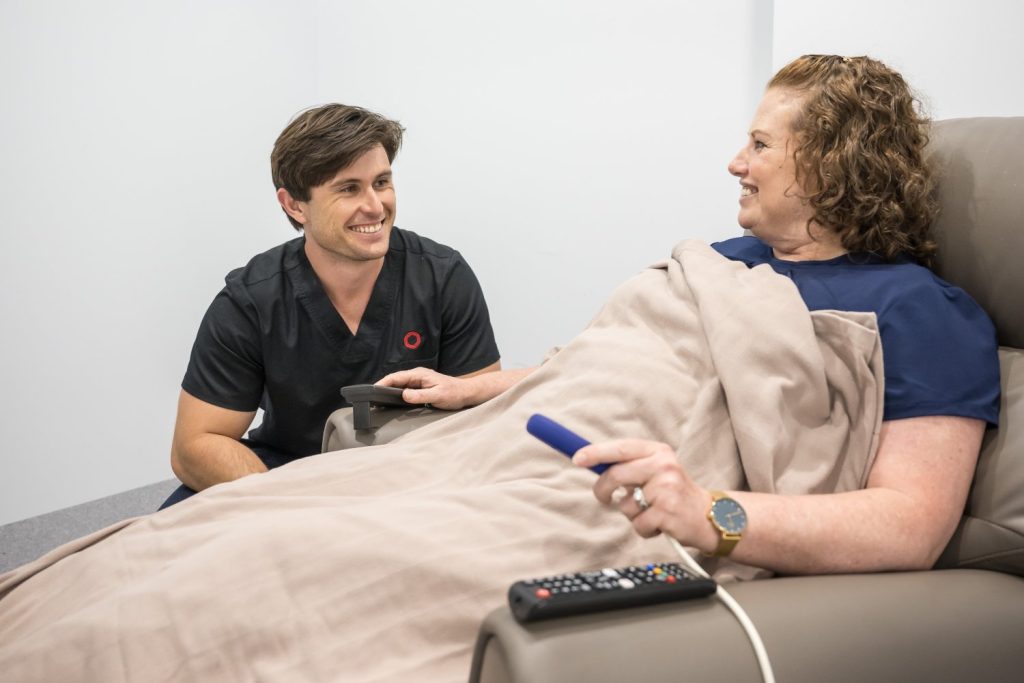
During this time, you’ll relax in the comfort of the uptake room, and you can watch TV. You may also listen to music or a podcast on your phone if you prefer, however, please note that you won’t be able to use your phone to text or scroll through social media during the uptake period.
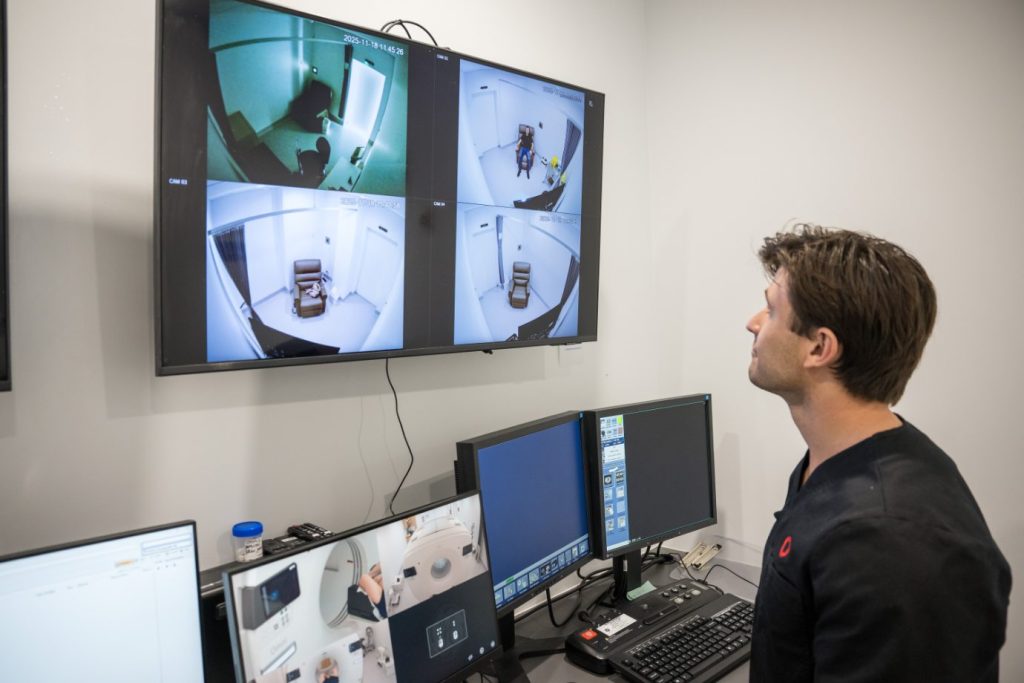
You’ll be alone in the room, but our NMT will check your progress via a camera, while you rest. Relaxing helps the tracer reach all the tissues and improves image quality.
What happens during the PET/CT scan itself
When the uptake period is over, you’ll be asked to go to the bathroom and empty your bladder. This gives us a clearer picture of the pelvis. You’ll also be asked to remove any spectacles, jewellery, watches or metal dentures.
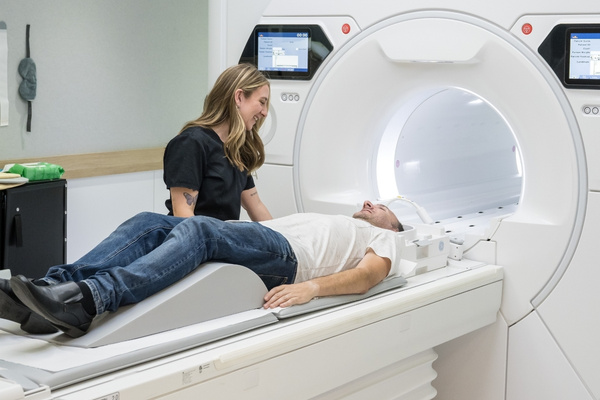
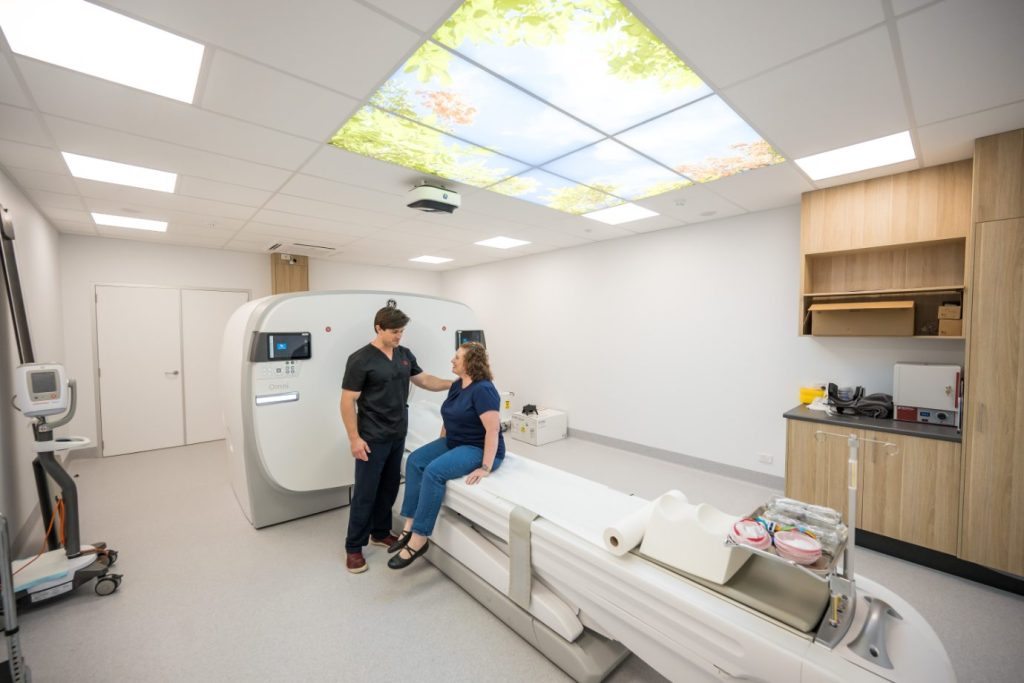
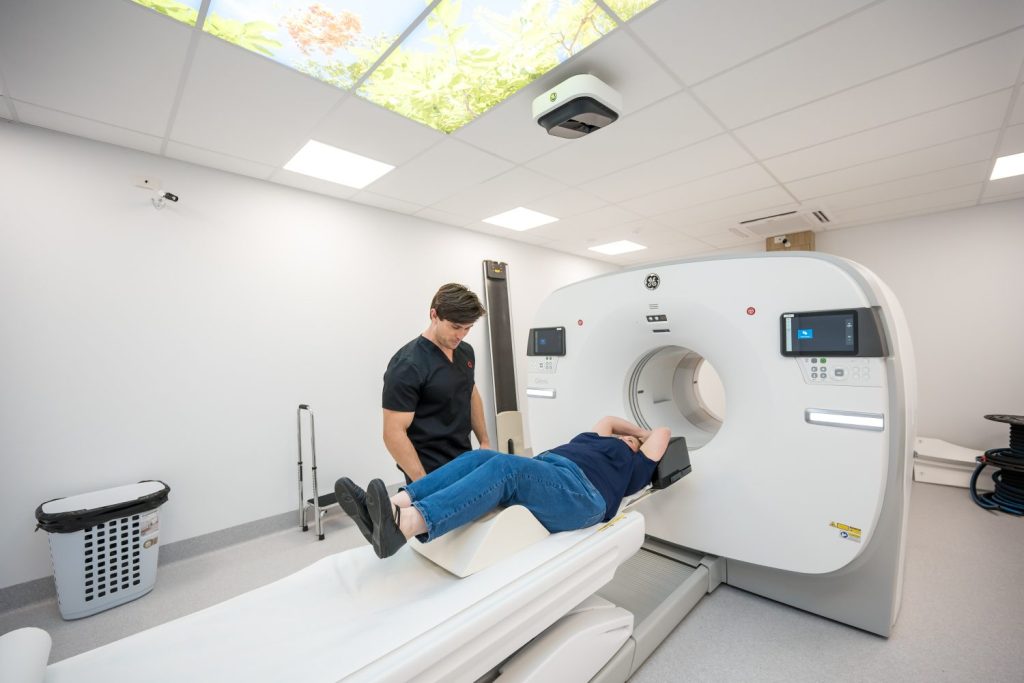
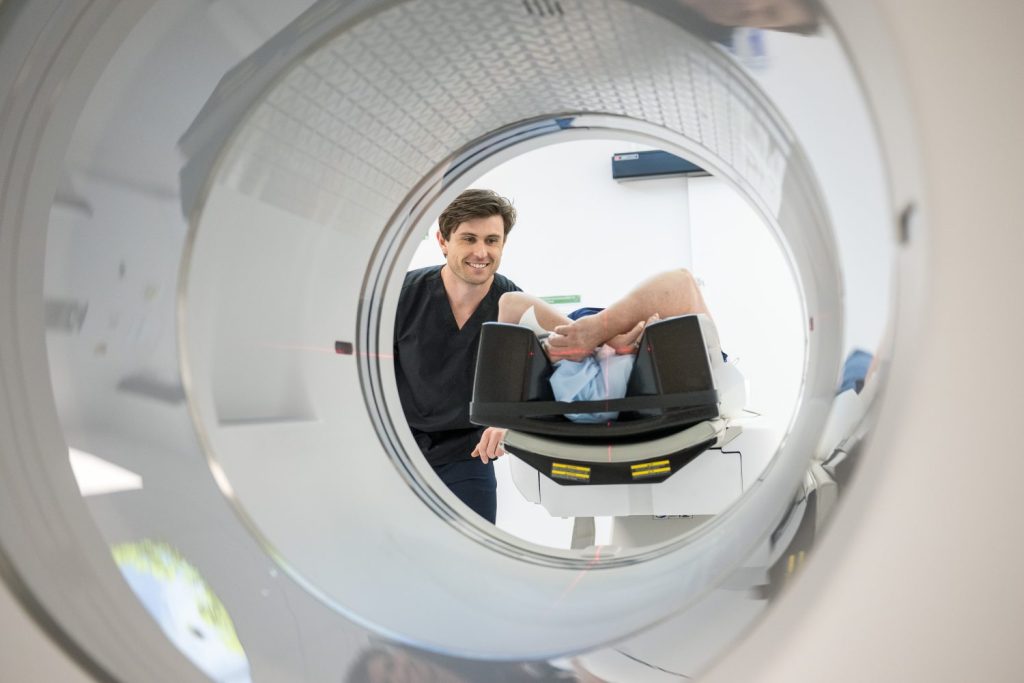
Your NMT will guide you to the scanning room and help you settle on the scanner bed. The machine looks like a CT scanner, just slightly deeper.
Here’s what to expect:
- You’ll lie on your back
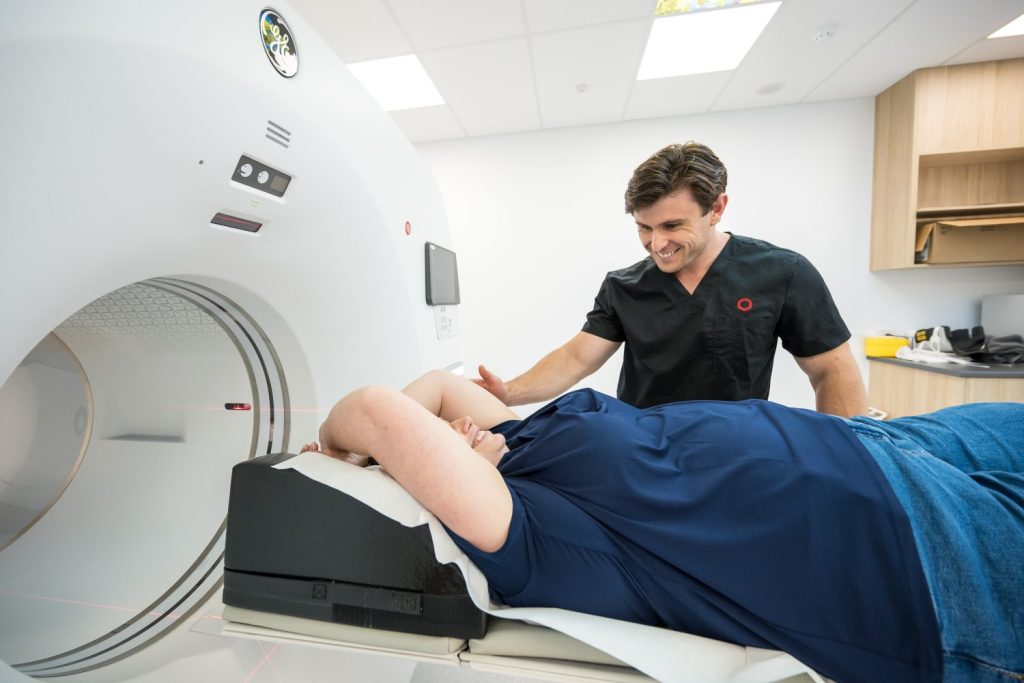
- If you’re able, you’ll be asked to raise your arms above your head so we can take the clearest images
- The NMT will move the bed slowly in and out of the scanner
- You will receive simple breathing instructions
- You will need to keep very still for short periods to avoid blurry images
This usually takes about 15 minutes.
The PET scan is done first, then followed immediately by the CT scan on the same machine. If your doctor has requested a CT with contrast, the contrast will be injected through your cannula. The CT scan takes around 10 minutes.
What happens after your PET/CT scan
Once all the imaging is complete, your NMT will help you off the scanner bed and as a safety precaution, you’ll wait about 10 minutes to ensure you have no side effects from the contrast. Then the NMT will remove the cannula, and provide any final information.
You’re free to return to your normal activities unless you’ve been informed otherwise. We encourage you to drink plenty of fluids throughout the rest of the day to flush the rest of the tracer out of your system.
Your images will be carefully reviewed by a specialist radiologist and a report sent back to your referring doctor. Your doctor will discuss the findings with you. You will be able to view your report and the images in our IQ Vue app after 7 days.
Key takeaways
The PET/CT scan procedure may sound complex, but most patients tell us they’re pleasantly surprised by how smooth and straightforward the process feels once they’re in the clinic.
Key takeaways are:
- Follow the fasting and preparation instructions carefully
- Wear comfortable clothing with no metal
- Allow yourself time to relax during the uptake period
A calmer PET/CT scan experience on the Sunshine Coast
At Sunshine Coast Radiology’s Noosa clinic, a PET/CT scan is not rushed. You’re given time to settle in, space to rest privately, and clear explanations at every step so there are no surprises. Many patients tell us the procedure feels easier than they expected, simply because they know what to expect and feel looked after throughout.
If you’ve been referred for a PET/CT scan, we’re here to support you and make your imaging journey as comfortable as possible.