Prostate Cancer: Take Charge of Your Health
Why Prostate Health Matters
Prostate cancer is the most common cancer in Australian men, with 1 in 5 Aussie men being diagnosed during their lifetime. The good news is that when doctors find prostate cancer early, the survival rate is 96%.
Talking to your doctor about prostate health could protect your quality of life.
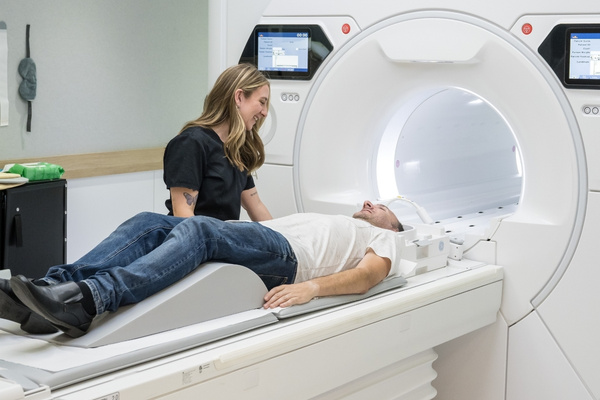
Our expert imaging team is here to look after you. We use medical imaging to help detect prostate cancer. This includes Prostate MRI and prostate ultrasound.
Common Symptoms of Prostate Problems
Changes in urine habits are often the first sign of a problem.
Symptoms may include:
- A weak urine flow or trouble starting and stopping
- Getting up several times at night to urinate
- Pain or burning when you pass urine
- Blood in your urine or semen
- Ongoing pelvic discomfort
These signs do not always mean prostate cancer. They may also point to BPH or another issue. If you notice changes, talk with your doctor.
What is the Prostate?
The prostate is a small gland. It sits below the bladder and in front of the rectum. It surrounds the urethra, the tube that carries urine.
As men age, the prostate can change. This can lead to an enlarged prostate or benign prostatic hyperplasia (BPH).
Detecting Prostate Cancer Early
Early detection matters. If your PSA level is high, your doctor may suggest more tests. These may include medical imaging or a digital rectal exam (DRE) by a urologist.
Diagnosis Process
Initial Tests
Prostate Specific Antigen (PSA) Test
- A simple blood test that checks PSA levels.
- PSA can rise because of prostate problems.
- A high PSA does not always mean prostate cancer.
- It is still an important first step.
Midstream Urine Test
- Used to diagnose prostatitis
- Important step to determine if PSA levels or symptoms can be attributed to prostatitis
Diagnostic Tests
Digital Rectal Exam (DRE)
- A quick check where your doctor feels the prostate through the rectum.
- It helps check the size and feel of the gland.
Multi-Parametric MRI
- Gives clear images of the prostate.
- Helps find cancer cells.
- It can sometimes avoid a biopsy if the scan is clear.
- If a biopsy is needed, MRI helps guide the best sample.
Prostate Ultrasound
- Uses sound waves to look at the prostate.
- Detects nodules, enlargement, or other issues.
- It is safe, non-invasive, and radiation-free.
Biopsy
- Performed under general anaesthetic
- Used to investigate lesions shown on MRI
Scans after Diagnosis
PSMA-PET/CT
- Used after diagnosis of prostate cancer to check if cancer has spread
- Highly accurate, especially in patients with higher risk factors
CT Scan
- Scan of abdomen, pelvis and bones
- Used after diagnosis of prostate cancer to check if cancer has spread
Further Imaging
If you have been diagnosed with prostate cancer, you may need more medical imaging scans to:
- Check if cancer cells have spread
- Help plan the best treatment
- Monitor how treatment is working
- Give surgeons useful details

Why Testing Matters
Early detection allows for more treatment options, fewer side effects, and a better quality of life.
- Early stage prostate cancer often has no symptoms.
- A simple blood test and quick exam can offer peace of mind.
- If caught early, prostate cancer is highly treatable, and survival rates are very high.
Don’t wait until symptoms appear. Be proactive and talk to your doctor today.
Take the Next Step
If you are concerned about your prostate gland, pay attention to changes in your urine flow. If you have a high PSA level, it’s time to take action.
Book a prostate health check or scan today. Protect your future and your quality of life.
Frequently Asked Questions
Why does prostate cancer screening matter?
Early finding improves outcomes. Prostate cancer is the most common cancer in Australian men, and when doctors find it early, the survival rate is about 96%. Early stage prostate cancer often has no symptoms, so screening can give more treatment choices, fewer side effects, and a better quality of life.
What does a PSA test show, and does a high PSA always mean cancer?
What symptoms should I watch for, and do they always mean prostate cancer?
How do the main screening and assessment tools differ (PSA, MRI, DRE, ultrasound)?
PSA blood test: A first-step test that checks a protein linked to prostate problems. High results lead to more checks.
Multi-parametric MRI: Gives detailed images of the prostate to help find cancer and guide care. In some cases, a clear MRI can avoid a biopsy. If a biopsy is needed, MRI helps guide the best sample.
Digital rectal exam (DRE): A quick physical exam where a doctor feels the prostate through the rectum to check size and texture.
Prostate ultrasound: Uses sound waves to look for nodules, enlargement, or other issues. It is safe, non-invasive, and radiation-free.
When is further imaging needed after a prostate cancer diagnosis?
If you have prostate cancer, more medical imaging may be used to check if cancer has spread, help plan the best treatment, watch how treatment is working, and give key details for surgeons.