
Explore the possibilities
Your future starts now
Whether you’re considering options for your post-school life or you’ve had your heart set on a career in radiology forever, Sunshine Coast Radiology is here to support you to become the next generation of leading radiologists, sonographers and radiographers.
A Career where care meets science
Why Medical Imaging?
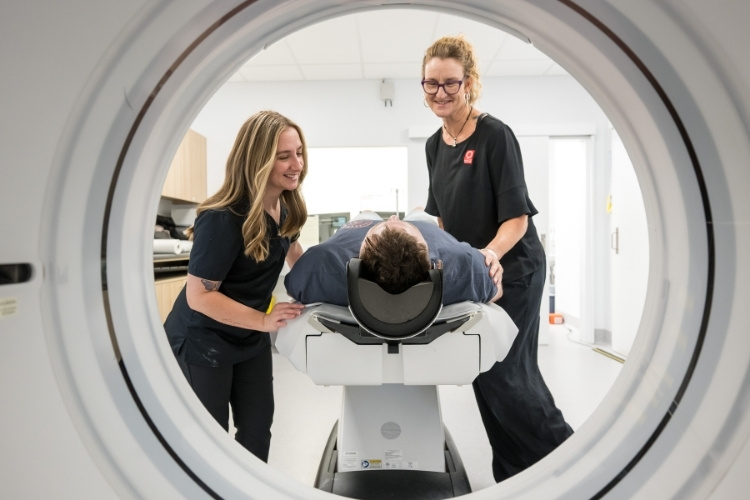
With medical imaging you can combine a love of science with care, seeing patients who truly need your expertise.
And you get to use the latest technology and continually expand your skills while contributing meaningfully to your community.
Medical imaging as a career is in high demand – and that demand is expected to grow well into the future.
Your career in medical imaging can take you anywhere! This career path can adapt to your lifestyle, giving you the flexibility to work in short-term or permanent positions.
What does a medical imaging Professional Look like?
- Compassionate and patient-focused
- Tech-savvy
- Strong understanding of anatomy and imaging
- Strong communication and teamwork skills
- Comfortable in fast-paced, clinical environments
A career in Medical imaging is:
- High in demand: with jobs available across Australia and internationally
- Rewarding: make a difference in patients’ lives every day
- Always evolving: continuous learning and cutting edge technology keeps the role exciting
Learn more
Join us for an interactive evening!
Are you in Year 10, 11 or 12 and thinking about a career in Medical Imaging?
Apply now to join us for our Medical Imaging Clinic Night at Sunshine Coast Radiology, an interactive and inspiring evening where you can discover how careers in Radiography, Sonography and Nuclear Medicine could be your pathway to Medical Imaging.
What you’ll experience:
- Meet real medical imaging professionals, who can talk to you about what they do
- Learn the steps from high school to university to your first job
- Discover a day in the life of medical imaging
- Opportunity to ask questions and explore career opportunities in a growth field!
Who should come?
Students in Year 10, 11 or 12 who are curious about careers in Medical Imaging.
Please Note: Places are limited to 20 students and applications close on 23 April 2026. After applying, you will receive an email in due course to advise if your application to attend the evening has been successful.
There is the opportunity to join a wait list for spaces that may become available for this date, or we can notify you about our next clinic open night for you to attend at a later date.
So, you're interested in
Radiography
What Does a Radiographer Do?
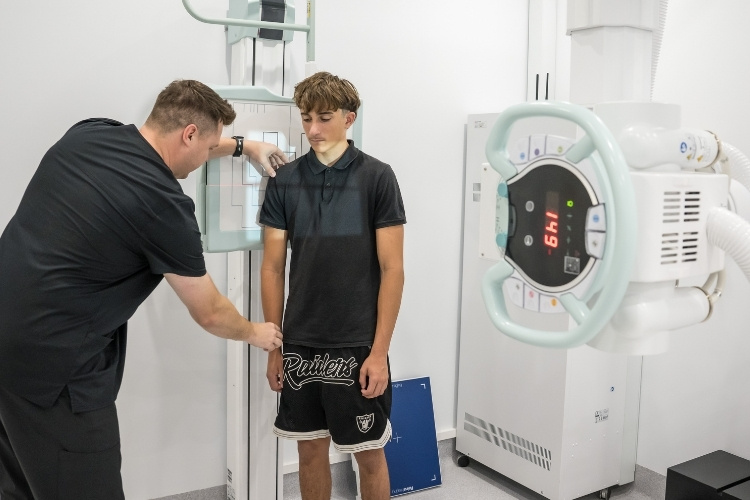
Radiographers are healthcare professionals who use imaging technology (such as X-rays, CT scans, MRI, and fluoroscopy) to assist in diagnosing and monitoring patient conditions. They work closely with radiologists, doctors and other health professionals in hospital and clinic settings.
How Do You Become a Radiographer?
Complete Year 12: Recommended subjects include English, Mathematical Methods and/or Specialist Mathematics, Physics. Enrol and Study Degree: 4 years, including clinical practice time in a supervised setting in a hospital or private clinic. Apply for General Registration: Once the supervised practice is completed and approved and you have graduated from your university degree, apply for general registration with Australian Health Professionals Regulation Agency (AHPRA).Education Pathway (Australia):
ATAR Requirement:
Varies by university (generally 65–90+)
Degree:
- Bachelor of Medical Radiation Science
- Bachelor of Applied Science (Medical Imaging)
- Bachelor of Medical Imaging
Universities Offering Courses:
Who supports you professionally:
The Australian Society of Medical Imaging and Radiation Therapy (ASMIRT) support the interests of its members.
Members include radiographers, sonographers, nuclear medicine technologist and radiation therapists. They provide advocacy for members and promote excellence in medical radiation science.


So, you're interested in
Sonography
What Does a Sonographer Do?
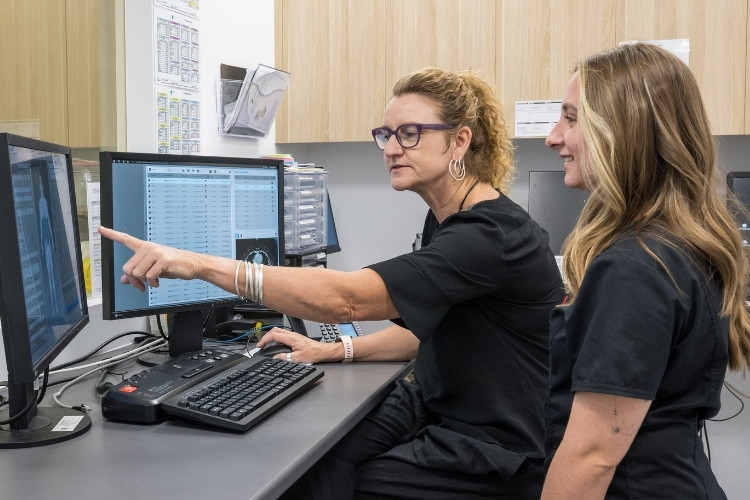
Sonographers are healthcare professionals who use high frequency sound waves (Ultrasounds) to produce images of the inside of the body. They work closely with radiologists, doctors, and other health professionals in hospital and clinic settings.
How Do You Become a Sonographer?
Complete Year 12:
Recommended subjects include English, Mathematical Methods and/or Specialist Mathematics, Physics.
Enrol and Study Degree:
4 years, including clinical practice time in a supervised setting in a hospital or private clinic.
Sonography is also available as a post-graduate degree, and a number of people use this pathway to becoming a sonographer. You could complete a Medical Imaging degree and work as a Radiographer initially, before working as a Trainee Sonographer while studying – being dual-qualified provides career flexibility.
Apply for General Registration:
Once the supervised practice is completed and approved and you have graduated from your university degree, apply for general registration with Australian Sonographer Accreditation Registry (ASAR).
Education Pathway (Australia):
ATAR Requirement:
Varies by university (generally 88–90+)
Degree:
- Bachelor of Medical Sonography
- Bachelor of Medical Imaging
Universities Offering Courses:
- Central Queensland University
- Queensland University of Technology (post-graduate degree)
- University of South Australia (post-graduate degree)
- and more!
Who supports you professionally:
Both the Australian Sonographers Association (ASA) and the Australian Sonographer Accreditation Registry (ASAR) support the interests of sonographers. They provide advocacy for members and support their ongoing professional development.
So, you're interested in
Nuclear Medicine
What Does a Nuclear Medicine Technologist Do?
Nuclear Medicine Technologists are healthcare professionals who use small amounts of radioactive drugs to diagnose and treat various conditions within the body. These drugs highlight specific organs, tissues, or bones, allowing for highly detailed imaging of physiological function.
They work closely with radiologists, doctors, and other health professionals in hospital and clinic settings. Nuclear Medicine is an in-demand field, and is used to diagnose cancer (and monitor treatment) and Alzheimer’s disease.
How Do You Become a Nuclear Medicine Technologist?
Complete Year 12:
Recommended subjects include English, Mathematical Methods, Physics and Biology.
Enrol and Study Degree:
4 years, including clinical practice time in a supervised setting in a hospital or private clinic.
Apply for General Registration:
Once the supervised practice is completed and approved and you have graduated from your university degree, apply for general registration with Australian Health Professionals Regulation Agency (AHPRA).
Education Pathway (Australia):
ATAR Requirement:
Varies by university (generally 65–90+)
Degree:
- Bachelor of Medical Radiation Science (Nuclear Medicine)
Universities Offering Courses:
Who supports you professionally:
Both the Australian Society of Medical Imaging and Radiation Therapy (ASMIRT) and the Australian and New Zealand Society of Nuclear Medicine (ANZSNM) support the interests of nuclear medicine professionals. Providing member advocacy and ongoing professional development.
Learn More about
A future in medical imaging
This is only a taste of what a career in medical imaging can offer. Hungry for more? There’s a wide range of diagnostic imaging offered in radiology clinics. We encourage you to explore more about these services.
Sunshine Coast Radiology is proud to be part of the Integral Diagnostics (IDX) group, a leading provider of imaging services across Australia and New Zealand. Employing some of Australasia’s foremost radiologists and medical imaging specialists across our network their clinics in the region. You can learn more about IDX here.